


Private label sunglasses are the fastest route from “selling a product” to “building a brand.” But the difference between a logo that lasts the life of the frame and one that rubs off in a month comes down to decisions most buyers don’t know they need to make. This guide covers every logo application method, the artwork files factories actually need, and the mistakes that ruin first orders.
You have found a manufacturer, picked your styles, and now comes the moment that turns a generic frame into your brand: the logo.
It sounds like the simplest step. It is not. Logo application is a manufacturing process with its own methods, costs, durability ratings, and failure modes — and the “we’ll just print it” assumption is how brands end up with 3,000 sunglasses whose logos fade before the first reorder.
Here is how professional brands do it, from method selection to artwork specs to final inspection.
Step 1: Choose Your Customization Level
Private label customization exists on a spectrum. More customization means more cost, higher MOQs, and longer lead times — so match the level to your brand stage:
| Level | What You Customize | Typical MOQ | Best For |
|---|---|---|---|
| Logo only | Your logo on factory’s ready styles | 100-300 pcs | Market testing, fastest launch |
| Logo + colors | Logo plus your colorway selection from stock materials | 300 pcs | Brands with an established palette |
| Logo + colors + packaging | Full brand presentation: frames, cases, cloths, boxes | 300 pcs (+500-1,000 for custom packaging) | Retail-ready brands |
| Full ODM | Everything above plus design modifications (temple shape, lens colors, hardware) | 300-600 pcs | Differentiated collections |
If you are unsure which business model fits — ready stock, ODM, or full OEM — our OEM vs ODM guide walks through the trade-offs, and the MOQ guide explains how customization level affects minimums.
Step 2: Pick the Right Logo Application Method
This is the decision that determines whether your logo survives six months of daily wear. Each method has a durability profile, a cost profile, and materials it works on:
| Method | How It Works | Durability | Best Materials | Relative Cost |
|---|---|---|---|---|
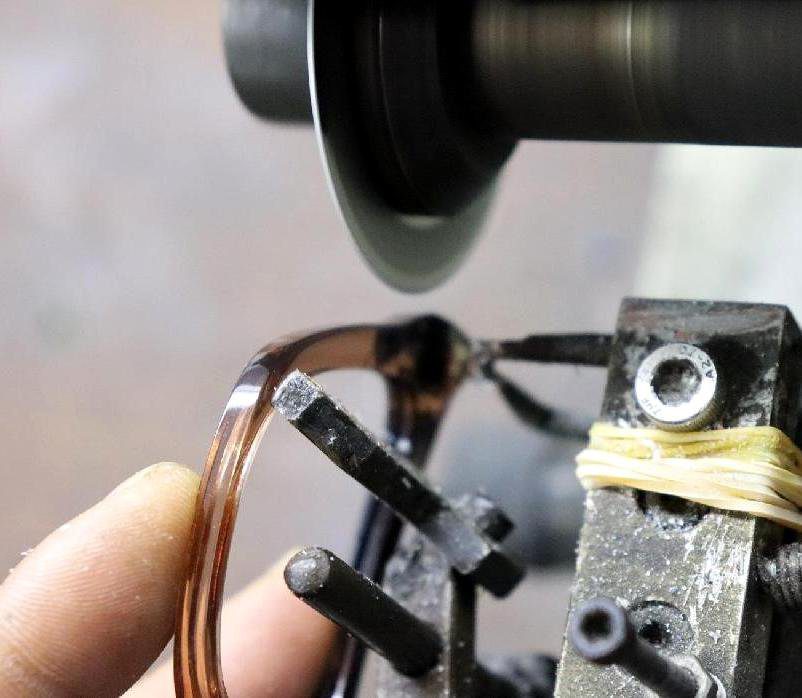
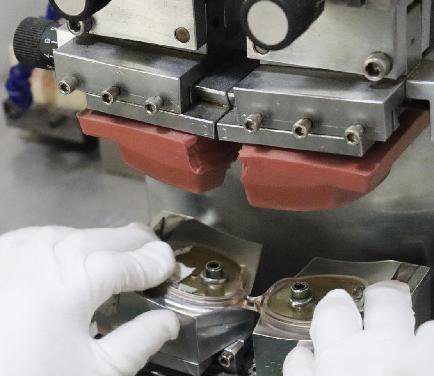
| Pad printing (tampo) | Silicone pad transfers ink onto the temple | Good with proper curing; can wear with heavy sweat/friction | Acetate, TR90, PC, painted surfaces | Low — the industry workhorse |
| Laser engraving | Laser etches the logo into the surface | Excellent — permanent, cannot peel | Metal temples, bamboo, wood; subtle tone-on-tone on acetate | Low-medium |
| Metal logo plaque/inlay | A small metal emblem is set into a milled recess in the temple | Outstanding — premium hardware feel | Acetate (the classic premium look) | Medium-high (tooling for the emblem) |
| Hot stamping (foil) | Heat presses metallic foil onto the surface | Moderate — can wear on flex points | Leather cases, pouches, some frame finishes | Low |
| UV digital printing | Inkjet-cured full-color printing | Good — handles gradients and multicolor logos | Flat-ish temple surfaces, most plastics | Medium |
| Embossed/debossed (in-mold) | Logo is formed into the frame during injection molding | Excellent — part of the frame itself | TR90, PC injection frames (requires mold modification) | Higher upfront (mold work), near-zero per piece |
| Lens etching/printing | Laser mark or print on the lens corner | Excellent (etch), Good (print) | Demo lenses, sun lenses | Low-medium |
The professional default: pad printing or laser engraving for value and mid-range lines; metal plaque inlay for premium acetate collections; in-mold logos for high-volume sports/TR90 frames.
Step 3: Prepare Artwork Files the Factory Can Actually Use
The number one cause of sampling delays is bad artwork. Factories need:
- Vector format: AI, EPS, or PDF with outlined fonts. A PNG or JPG — even a high-resolution one — cannot be used for pad printing plates or laser paths. If your logo only exists as a raster file, get it re-drawn as vector first (any freelance designer can do this inexpensively).
- Pantone (PMS) color codes: “Navy blue” is not a color spec; PANTONE 2767 C is. Specify coated (C) references for ink on frames.
- Exact placement and dimensions: Temple outside, temple inside, or lens corner — with the logo width in millimeters (typical temple logos run 20-35 mm wide). A simple annotated photo or mockup prevents interpretation errors.
- One-color and reverse versions: Your full-color logo may need single-color and white (reverse) variants for different frame colors. Decide the fallback: which single color represents your brand on a dark temple?
Pro tip: ask the factory for the placement template of your chosen model — a dimensioned drawing showing printable zones. Logos placed over hinge flex points or sharp curves fail prematurely no matter the method.
Step 4: Customize Beyond the Logo
A logo alone makes the frame yours legally; the details make it yours visually. Consider the full package:
- Colorways: Stock acetate colors keep MOQs and lead times low; custom acetate patterns add 15-30 days and material minimums (see the MOQ guide for the numbers).
- Lens selection: Tint colors, gradient vs solid, polarized vs standard, UV400 rating — lenses change the perceived quality more than any other component.
- Hardware details: Hinge color (gold/silver/gunmetal), temple tip colors, and rivet styles.
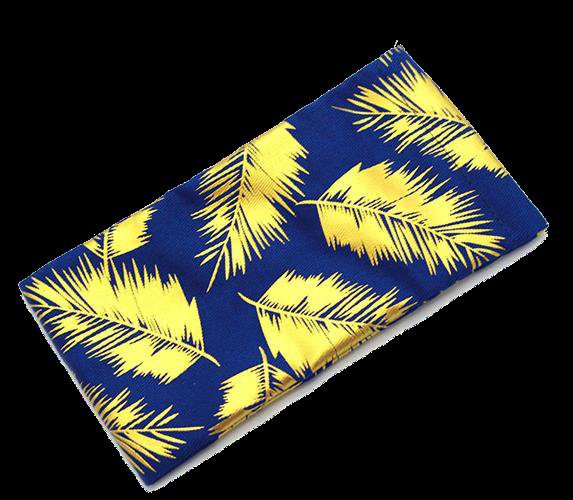
- Packaging: Custom cases, pouches, cleaning cloths, and boxes carry their own supplier MOQs (typically 500-1,000 pieces) — but nothing says “real brand” like a complete unboxing. Many factories will produce your packaging in one batch and store it for repeat orders.
Step 5: Approve a Pre-Production Sample — and Test the Logo
Never skip the physical sample, and when it arrives, test the logo like a skeptic:
- Rub test: 20 firm rubs with a dry thumb, then 20 with a cloth dampened with water, then sunscreen on a cotton swab (sunscreen is the silent killer of temple prints — it dissolves some inks).
- Adhesion check: Fingernail scratch at the logo edge — quality pad printing with proper curing should not lift.
- Placement measurement: Check position against your spec on both temples — left/right symmetry matters.
- Color check under daylight: Pantone matching on curved dark surfaces reads differently than on paper; approve under natural light, not office fluorescents.
- Photograph everything: Your approved sample photos become the QC reference for the bulk order.
7 Common Private Label Mistakes (and How to Avoid Them)
- Sending a JPG logo → Always deliver vector files (AI/EPS/PDF, fonts outlined).
- Full-color logo on a 3mm temple → Simplify; fine details and gradients die at small sizes. One or two colors maximum for pad printing.
- No Pantone spec → “Match my website blue” produces a different blue on every batch.
- Logo on the hinge flex zone → Ink cracks where the frame flexes; keep logos on rigid temple sections.
- Skipping the sunscreen test → Sunscreen and skin oils degrade uncured inks; demand cured/2K inks for temples.
- Approving from photos only → Photos hide adhesion and placement-depth issues; always test a physical pre-production sample.
- Forgetting packaging lead times → Custom cases and boxes often need 500-1,000 pc minimums and extra weeks; order them with the frames, not after.
Frequently Asked Questions
What is the minimum order for custom logo sunglasses? Typically 300 pieces per order for ODM private label production (often structured as 100 pcs per color × 3 colors). Some factories offer logo application on ready-stock styles from 100 pieces — the fastest way to test your brand in the market.
What logo file format do eyewear factories need? Vector files: AI, EPS, or PDF with fonts outlined, plus Pantone (PMS) color codes and exact placement dimensions in millimeters. Raster files (JPG/PNG) cannot drive pad printing plates or laser engraving paths.
Which logo method lasts longest on sunglasses? Metal plaque inlay and in-mold logos are effectively permanent. Laser engraving is permanent but subtle. Quality pad printing with properly cured inks lasts years under normal use — the key is the curing process and placement away from flex points.
Can I customize the packaging too? Yes — cases, pouches, cleaning cloths and boxes can all carry your branding, but they come from specialist sub-suppliers with their own MOQs (typically 500-1,000 pieces) and lead times. Many factories will produce your packaging in bulk and store it across repeat orders.
How much does logo customization add to the unit cost? Pad printing or laser engraving usually adds very little per piece at standard MOQs — often just cents. Metal plaque inlays cost more (emblem tooling plus assembly) and in-mold logos require mold modification, which makes sense at higher volumes.
How long does private label production take? For ODM orders with logo and stock materials, plan 60-90 days including sampling. Ready-stock styles with logo application can ship in 10-15 days. Add 15-30 days for custom acetate colors or custom packaging.
The Bottom Line
Private label done right is a system: pick the customization level that matches your brand stage, choose a logo method by durability rather than price, deliver production-ready vector artwork with Pantone specs, and treat the pre-production sample as a binding contract for quality. Do those four things and your logo will still look sharp when your customers come back for their second pair.
About Dongtian Eyewear: Founded in 1996 in Wenzhou, China, Dongtian has produced private label eyewear for brands in 50+ countries across our China and Thailand facilities. We offer every customization method in this guide — pad printing, laser engraving, metal plaque inlay, hot stamping and custom packaging — with MOQs from 300 pcs (OEM/ODM) or 100 pcs ready stock with logo application.
Ready to put your logo on it? Send us your artwork and target styles — we will recommend the right application method for your materials and budget, and include a free placement mockup with your quotation.