



Dong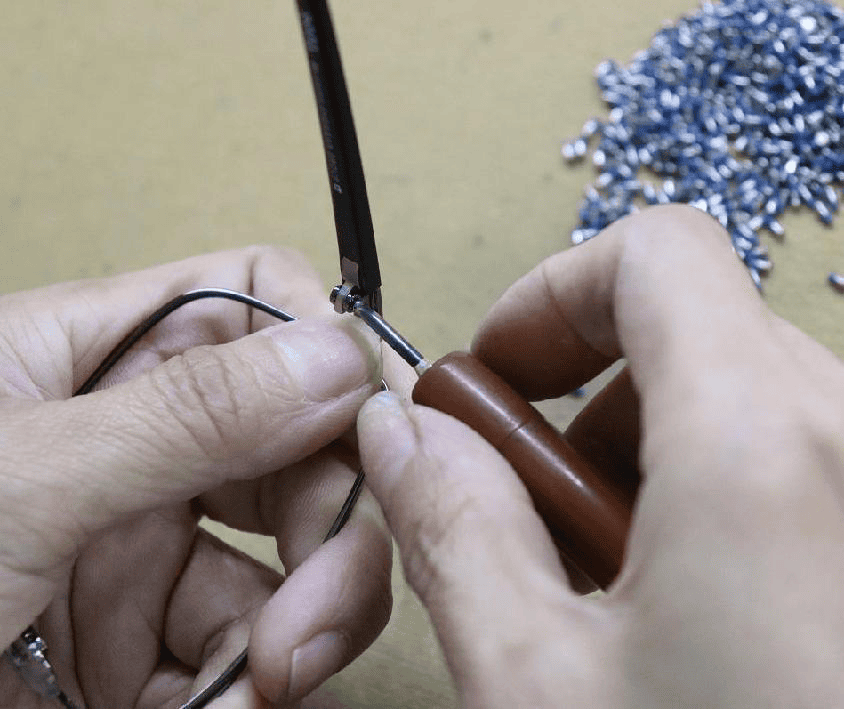 tian Glasses · Eyewear Manufacturing Insights · 2026
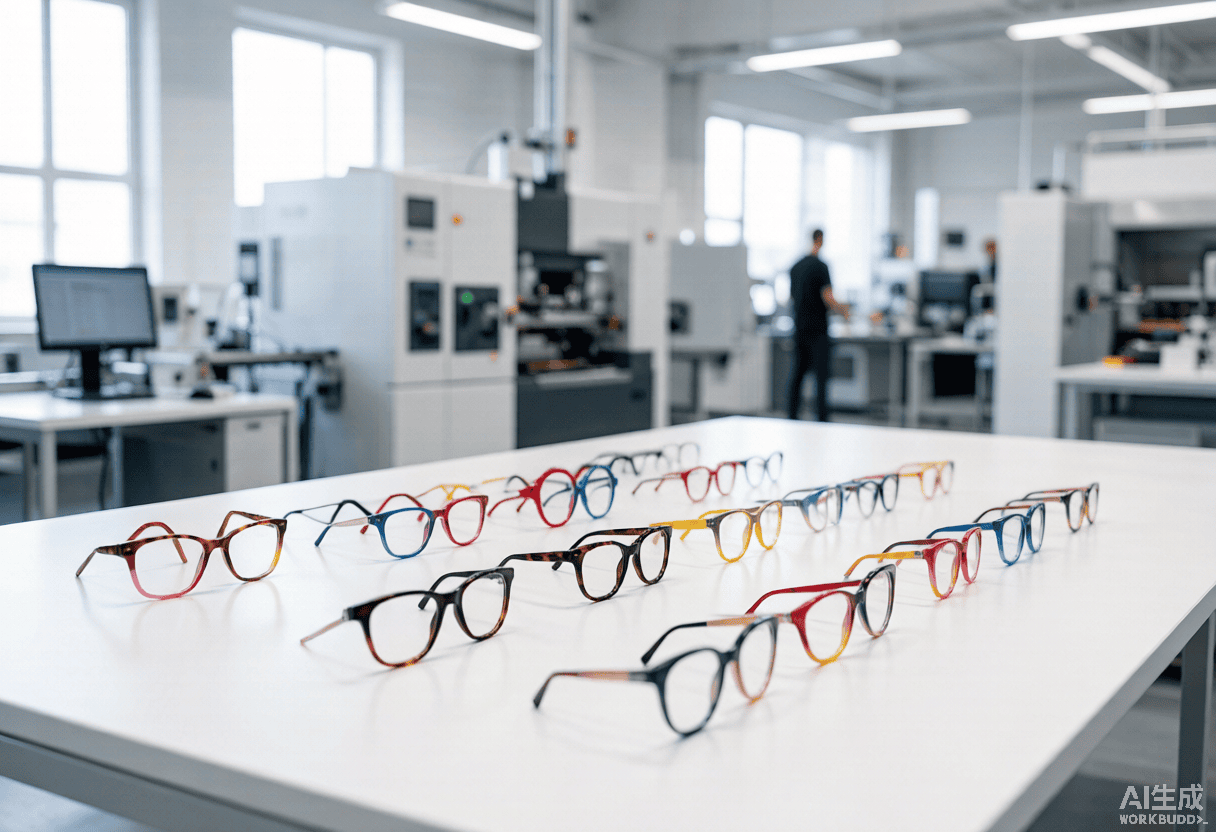
How to choose the right production model, what MOQ and pricing really look like, and how to vet a factory before you wire the deposit — from a manufacturer with 30 years on the factory floor.Acetate frames lined up on a modern production line.
Contents
- What Is OEM Eyewear Manufacturing?
- What Is ODM Eyewear Manufacturing?
- OEM vs ODM: Side-by-Side Comparison
- MOQ Explained: What to Expect at Each Customization Level
- How Much Does It Cost to Manufacture Sunglasses and Optical Frames?
- Lead Times: From Sample to Mass Production
- How to Vet an Eyewear Factory: A 7-Point Checklist
- Material Spotlight: Why Acetate Still Commands a Premium
- Who We Are: Dongtian Glasses
- 常见问题解答
If you are launching an eyewear brand — or moving production to a new supplier — the first fork in the road is deceptively simple: OEM or ODM? Pick the wrong model and you either overpay for development you didn’t need, or end up selling frames identical to your competitor’s. This guide breaks down both models with real numbers: MOQ tiers, FOB cost ranges by material, sampling and mass-production lead times, and a factory vetting checklist you can use on your next sourcing trip.
What Is OEM Eyewear Manufacturing?
OEM (Original Equipment Manufacturing) means the factory produces eyewear according to your own designs and specifications. You provide the tech pack — CAD drawings, materials, colors, dimensions — and the manufacturer handles tooling, production, and quality control. You own the design IP; the factory is your production arm.
OEM is the right choice when you have a differentiated design, an established brand identity, or specific technical requirements (a proprietary hinge, a custom acetate laminate, a unique fit for your market).
What Is ODM Eyewear Manufacturing?
ODM (Original Design Manufacturing) means the factory provides ready-made frame designs that you rebrand and customize. You select styles from the manufacturer’s catalog, then apply your logo, colors, lens options, and packaging. The factory owns the base design; you get speed and low development cost.
ODM is the right choice when you are testing a market, need a collection live in weeks rather than months, or want to minimize upfront tooling investment.
OEM vs ODM: Side-by-Side Comparison
| Dimension | OEM (Your Design) | ODM (Factory Design) |
|---|---|---|
| Design ownership | You own the IP | Factory owns the base design |
| Upfront cost | Higher (tooling, molds, development) | Low or none |
| Time to market | 3–5 months typical | 4–8 weeks typical |
| Differentiation | Fully exclusive styles | Shared base designs, customized finish |
| Best for | Established brands, unique concepts | Startups, market tests, fast replenishment |
| IP protection | Requires NNN agreement | Catalog styles may be sold to others |
Many mature brands run a hybrid strategy: ODM for entry-level volume lines, OEM for flagship collections. There is no permanently correct answer — only the correct answer for your current stage.
MOQ Explained: What to Expect at Each Customization Level
MOQ (Minimum Order Quantity) is where most first-time buyers get surprised. Here is what the industry actually looks like in 2026:
| Customization level | Typical MOQ | What you get |
|---|---|---|
| White label (logo on stock frames) | 50–100 pcs | Ready molds, your logo and packaging |
| Light customization (color, lens, finish) | 100–300 pcs | Existing frames in your Pantone colors |
| Full OEM (new mold from your design) | 300+ pcs per style | Exclusive tooling, 2–3 colorways included |
Practical tip: ask whether the MOQ can be split across colorways. A 300-piece OEM MOQ divided into three colors (100 each) is far friendlier to your inventory than 300 pieces of a single SKU.
How Much Does It Cost to Manufacture Sunglasses and Optical Frames?
FOB (Free On Board) pricing depends primarily on frame material, hardware, and lens specification. Reference ranges for 2026:
| Frame material | FOB reference range (per piece) | Notes |
|---|---|---|
| PC / injection | $1.00 – $3.00 | Highest volume, fastest cycles |
| TR90 | $1.50 – $3.50 | Flexible, lightweight, sports and kids lines |
| Metal (stainless steel alloys) | $2.00 – $5.00 | Plating quality drives the spread |
| Acetate | $3.00 – $8.00 | Hand-polishing and curing take time — and it shows |
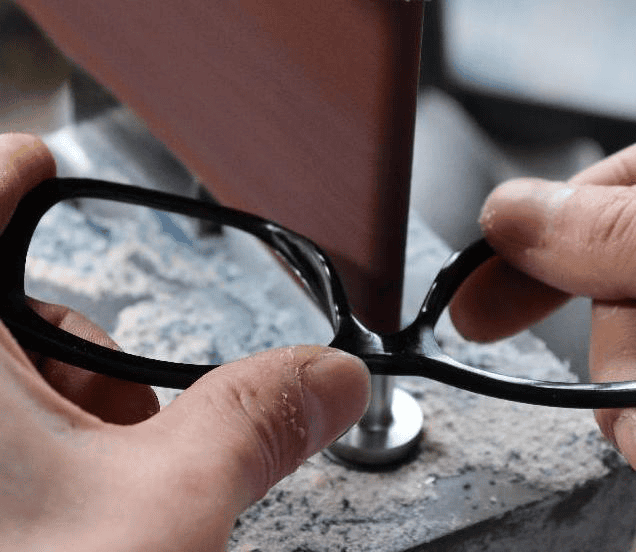
What moves you within each range: hinge quality (nickel-free stainless vs. standard), lens spec (UV400, polarized TAC, photochromic), logo method (laser engraving vs. metal plaque), and packaging. Custom-branded packaging typically adds $0.50–$1.50 per unit but can multiply perceived retail value.Hand-finishing an acetate frame — the step that separates premium frames from commodity ones.
Lead Times: From Sample to Mass Production
| Stage | Typical duration |
|---|---|
| Prototype / sampling | 7–15 days |
| Mass production — PC / TR90 | 30–45 days after sample approval |
| Mass production — acetate / metal | 60–90 days (polishing, curing, electroplating) |

Acetate and metal frames take roughly twice as long as injection frames — that is the cost of hand-finishing, not factory inefficiency. Build this into your seasonal calendar: a Spring collection briefed in January is already late for acetate.Precision tooling on the metal frame line.
How to Vet an Eyewear Factory: A 7-Point Checklist
Before you commit a deposit, verify these seven things. A trustworthy factory will answer every one without hesitation.
- Certifications — ISO 9001 for quality systems; CE and FDA for EU/US market access; BSCI or SEDEX for social compliance; GRS if you market recycled materials. Ask for certificate numbers, not just logos.
- Real factory, not a trading company — Request a video call from the production floor, or better, a third-party audit. Ask for photos of the workshop, not just the showroom.
- QC process — Is there inspection at every stage, or only pre-shipment? What AQL standard do they use (2.5 is the export norm)? Will they provide inspection reports with photos?
- Capacity and specialization — A factory strong in acetate may be mediocre in metal. Match their production lines to your product mix.
- IP protection — For OEM work, insist on an NNN (Non-Disclosure, Non-Use, Non-Circumvention) agreement before sending tech packs.
- Communication speed — Time-zone overlap matters less than response discipline. A factory that quotes in 24 hours during courtship usually behaves the same during production.
- Supply chain resilience — Post-2025 tariff shifts made dual-base manufacturing (e.g., China + Southeast Asia) a genuine advantage. Ask where your order would actually be produced, and what happens if trade policy changes mid-contract.Hinge assembly — small hardware, big impact on frame lifespan.
Material Spotlight: Why Acetate Still Commands a Premium
Cellulose acetate remains the material of choice for mid-to-premium optical frames and sunglasses. Unlike surface-coated plastics, acetate’s color runs through the entire block — it does not chip or fade. It is hypoallergenic, heat-adjustable for optician fitting, and available in virtually unlimited patterns, from classic tortoiseshell to custom brand-exclusive laminates.
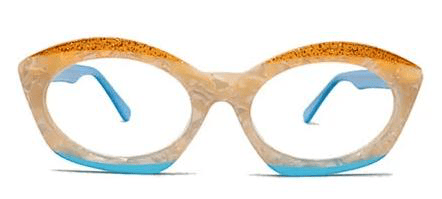
The sustainability conversation has also moved on: bio-acetate (made with bio-based plasticizers) and GRS-certified recycled materials are now auditable claims, not marketing language. If your brand story includes sustainability, verify the certificate — your retail partners in the EU increasingly will.A custom-laminated acetate frame — color runs through the material, not on it.
Who We Are: Dongtian Glasses
This guide comes from practice, not theory. Dongtian Glasses has designed, developed, and manufactured eyewear since 1996 — 30 years, four production facilities in Wenzhou, China (acetate, metal, injection, and our own lens workshop), and a fifth facility in Thailand opened in 2024. More than 1,000 employees produce for over 50 brand partners across 50 countries, with Europe, Latin America, and North America as our core markets.
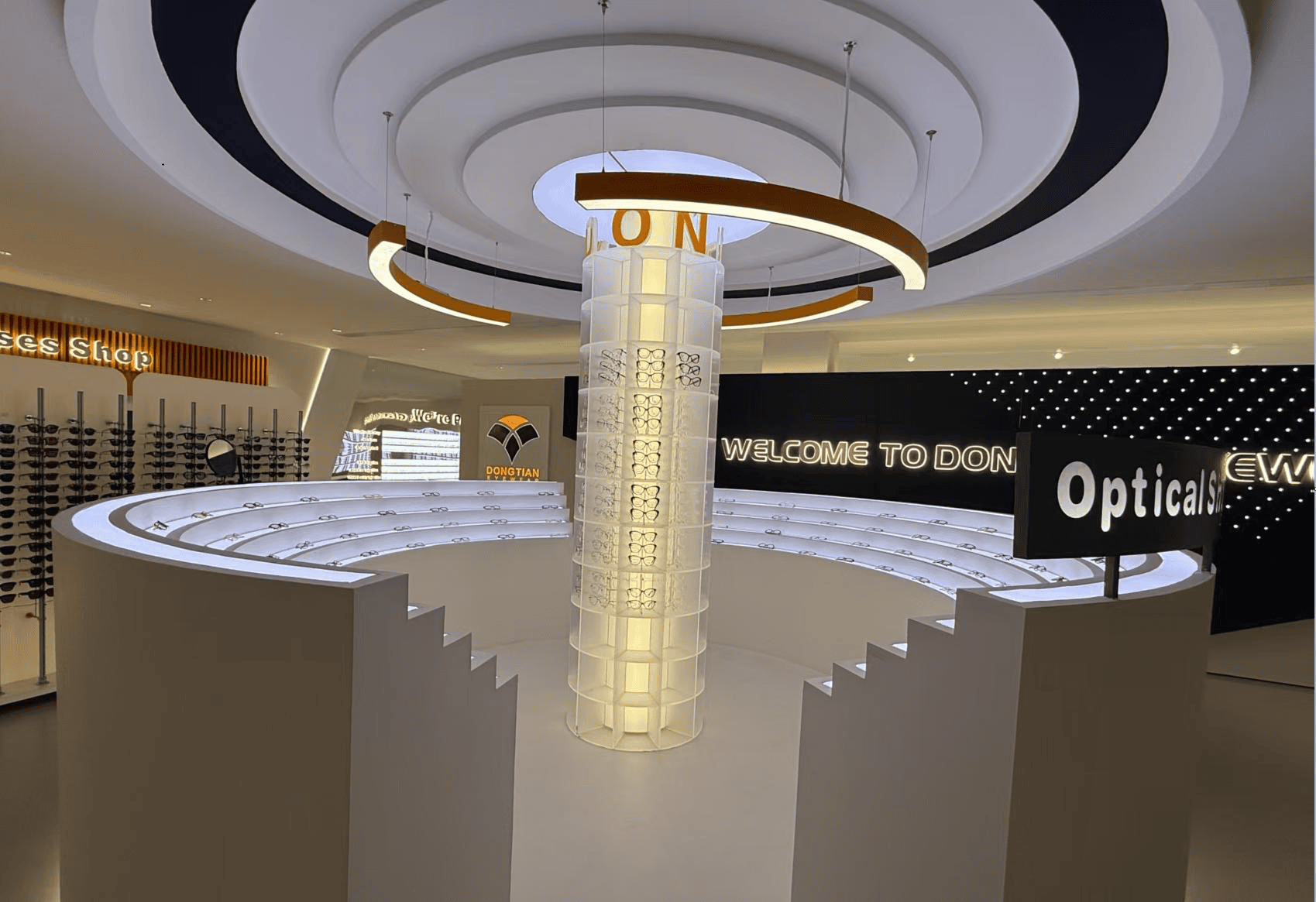
Our factories hold ISO, FDA, CE, BSCI, SEDEX, HIGG, and GRS certifications, and we support both OEM programs (your designs, protected by NNN agreements) and ODM collections (our catalog, your brand) — including low-MOQ trial orders for new brands. The China + Thailand dual-base structure lets us shift production as tariffs and logistics evolve, so your supply chain is not betting on a single country’s trade policy.The Dongtian showroom in Wenzhou — thousands of ODM styles ready for private labeling.
常见问题解答
What is the difference between OEM and ODM eyewear?
OEM means the factory manufactures frames from your own designs — you own the IP. ODM means you rebrand and customize the factory’s existing designs — faster and cheaper, but the base design is shared.
What is the typical MOQ for private label eyewear?
White-label logo customization starts around 50–100 pieces. Light customization (colors, lenses) runs 100–300 pieces. Full OEM with new molds typically requires 300+ pieces per style, often split across 2–3 colorways.
How much does it cost to manufacture custom sunglasses?
FOB pricing ranges from about $1–3 per piece for PC injection frames to $3–8 for hand-finished acetate, depending on materials, hardware, lens specification, and packaging.
How long does eyewear production take?
Sampling takes 7–15 days. Mass production runs 30–45 days for injection frames and 60–90 days for acetate or metal, measured from sample approval.
Do I own my design if I use an OEM manufacturer?
Yes — if you provide the original designs and sign an NNN agreement. A reputable factory will never sell your exclusive styles to other buyers or display them in public catalogs.
Ready to Start Your Eyewear Project?
Whether you need a 100-piece trial run to test the market or a full OEM program with exclusive molds, tell us your product type, quantity, and target market — our team will respond with a tailored quotation and MOQ options within 24 hours.
Contact Dongtian Glasses → Response within 24 hours, guaranteed.