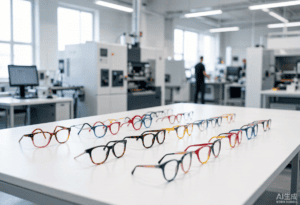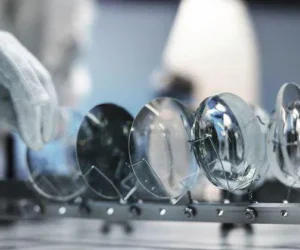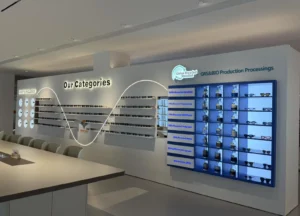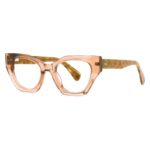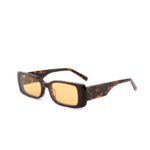





Some of the most commercially successful eyewear designs of recent seasons share one construction idea: combining materials that were traditionally used separately. Acetate fronts with metal temples. Metal frames with acetate temple tips. TR90 sports bases with premium detailing. For wholesale buyers, mixed-material construction has moved from a design curiosity to a practical strategy — it delivers visual differentiation while reusing proven component platforms, and it rewards manufacturers who run multiple material lines under one roof.
For buyers evaluating eyewear manufacturers for mixed-material programs, the supplier question is specific: can the factory execute every material in the combination at consistent quality, or will part of the frame be subcontracted?
Why Mixed-Material Design Sells
Mixed-material frames solve two problems at once. For the consumer, they combine the best properties of each material — the color depth of an acetate front with the lightness and adjustability of metal temples, for example. For the brand, they create visual signatures that pure-material competitors cannot copy exactly, using combinations that read as design rather than cost engineering.
Commercially, the approach also extends product lines efficiently: a proven acetate front can be re-templed in two or three metal variants, multiplying SKU options without new front tooling. This is one reason mixed-material styles appear so consistently in mid-premium collections.
The Common Combinations and What They Demand
Each pairing carries its own manufacturing requirements:
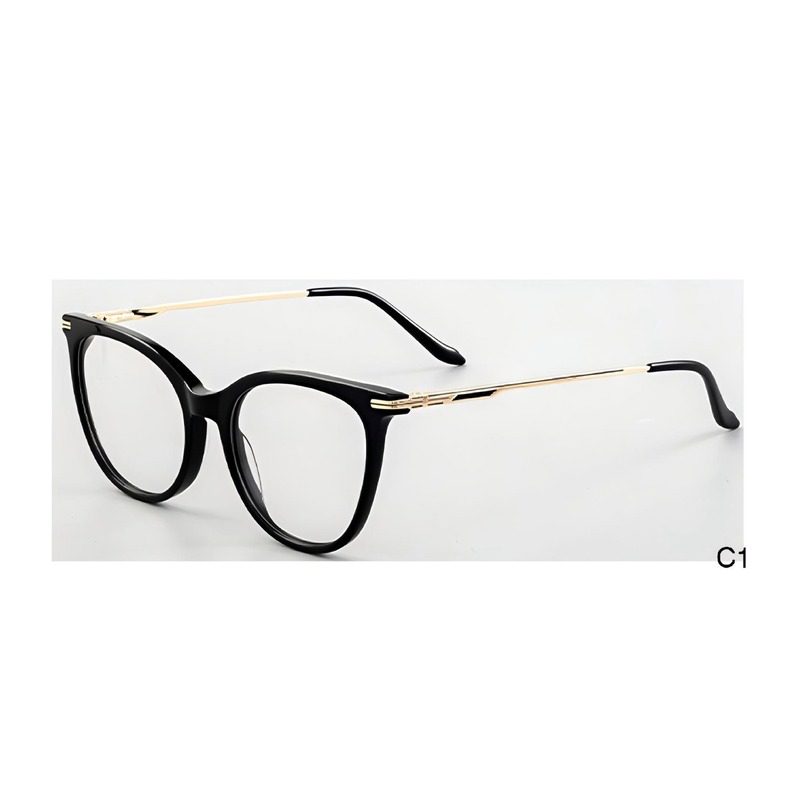
- Acetate front + metal temples: The classic premium hybrid. Demands clean hinge integration — the metal end piece must seat precisely in the milled acetate, and the two materials’ different responses to temperature and stress must be accounted for in assembly.
- Metal chassis + acetate tips: Common in titanium and fine metal lines, where acetate tips add color and comfort to otherwise minimalist frames. Requires reliable tip-fitting processes that survive years of daily handling.
- TR90 or PC bases + premium details: Rubberized grips, metal logo hardware, and decorated temple inserts that lift a sports or value frame into a higher price tier.
- ** acetate + titanium hybrids**: The top of the market, where the weight of titanium temples balances the substance of an acetate front.
The through-line: every combination introduces an interface — mechanical, thermal, and visual — where two materials meet. Those interfaces are precisely where quality problems concentrate, and where factory capability matters most.
The Supplier Question: One Roof or Three?
A mixed-material order placed with a single-material factory becomes a chain of subcontractors: the metal temples come from one vendor, the acetate fronts from another, assembly happens somewhere third. Each handoff adds lead time, communication loops, and — most importantly — diluted accountability when a tolerance mismatch appears.
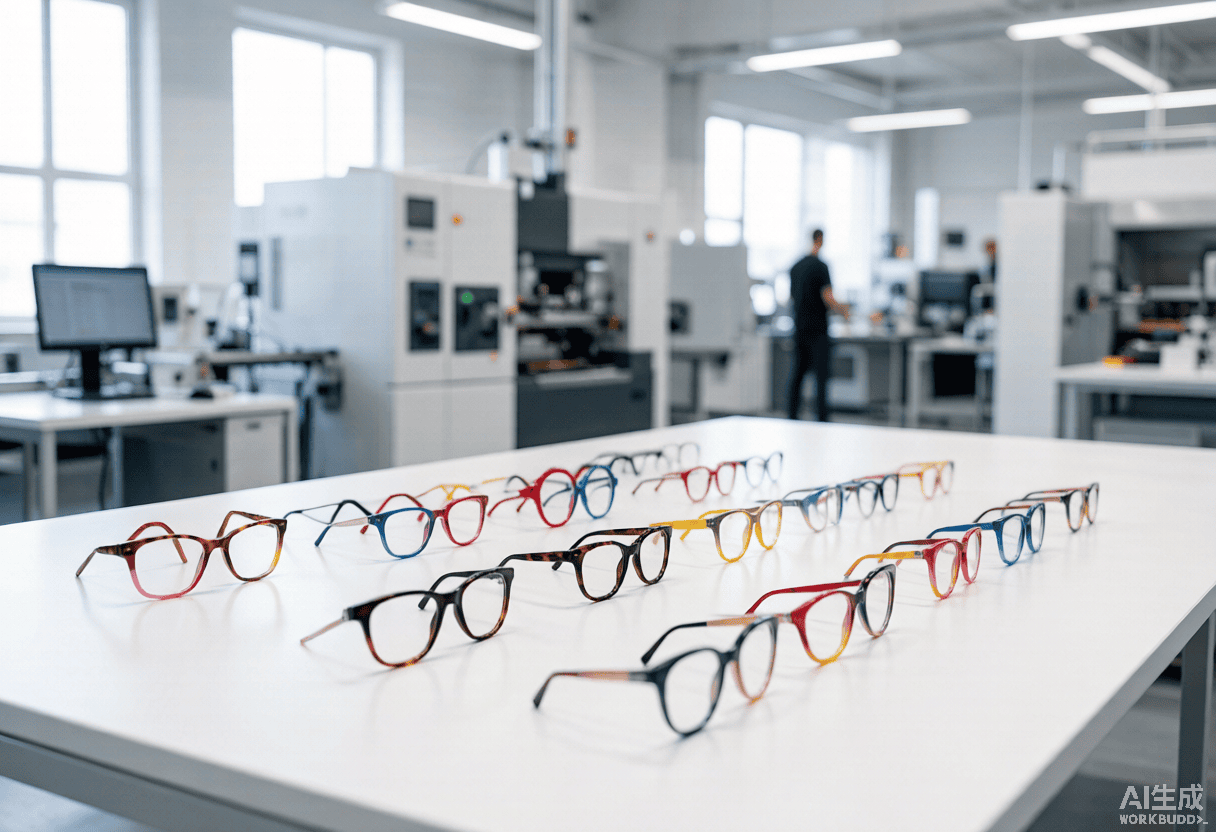
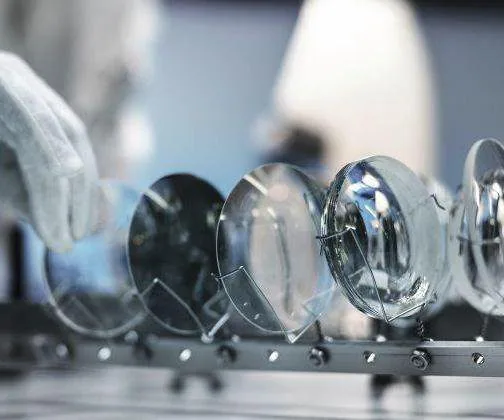
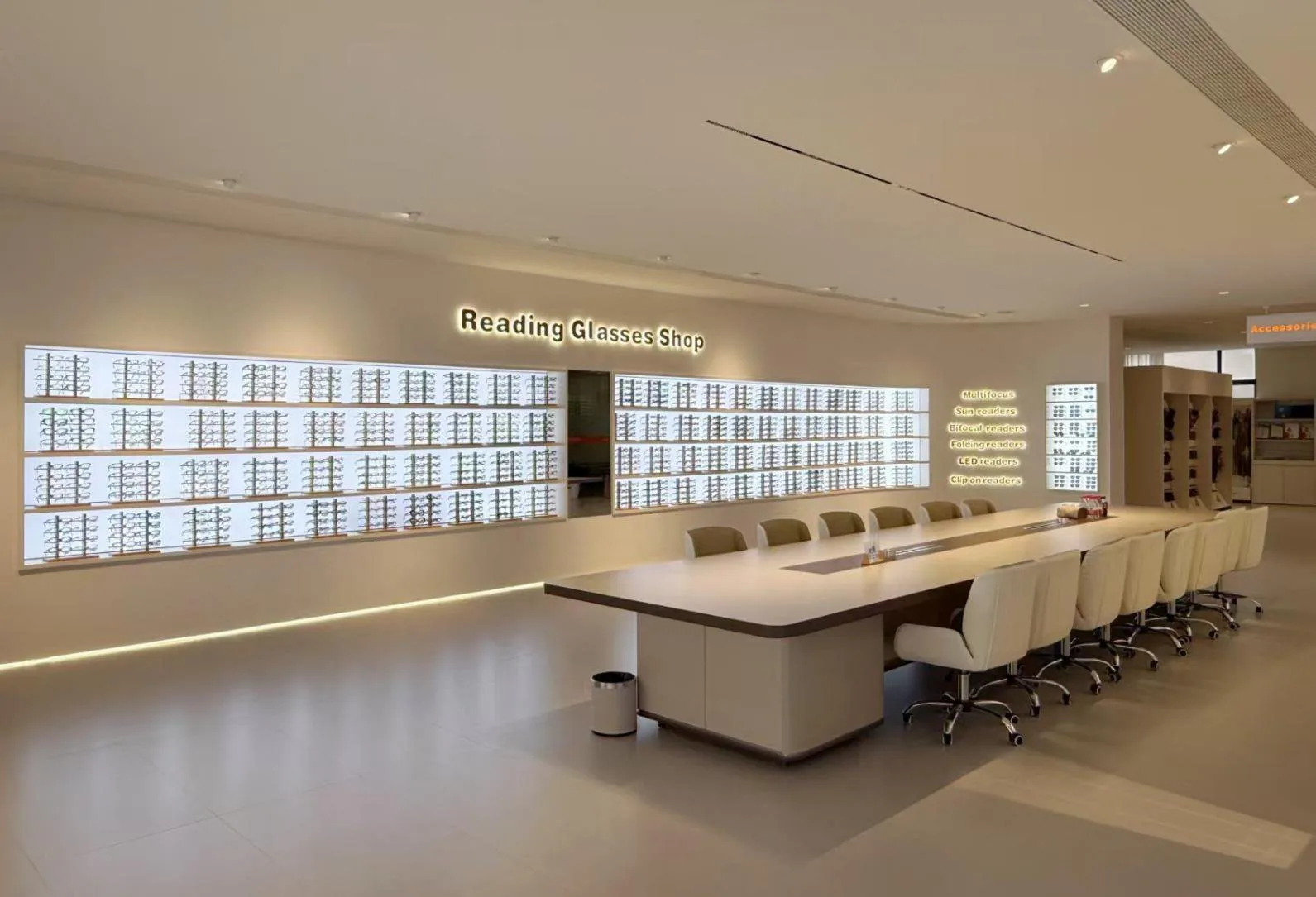
Manufacturers that run acetate, metal, and injection lines in-house can align the interfaces under one quality system: tolerances designed together, first-article checks across the full assembly, and a single party responsible for the finished frame. For buyers, the practical verification is straightforward — ask which production steps happen on site, and request to see the assembly line handling the exact combination you plan to order.
Planning the Order Structure
Mixed-material programs have two MOQ considerations worth planning around. First, the frame itself follows standard custom production minimums — our MOQ guide covers the typical 300-piece structures. Second, component-level minimums (custom metal temple colors, specific acetate patterns) can add their own floors, which is why designers often specify from existing component libraries when starting with smaller volumes.
Quality verification follows the same logic as any optical order: hinge cycle testing, coating adhesion, dimensional stability, and — for EU-bound metal components — nickel release compliance. Our certifications checklist applies per market.
The Outlook
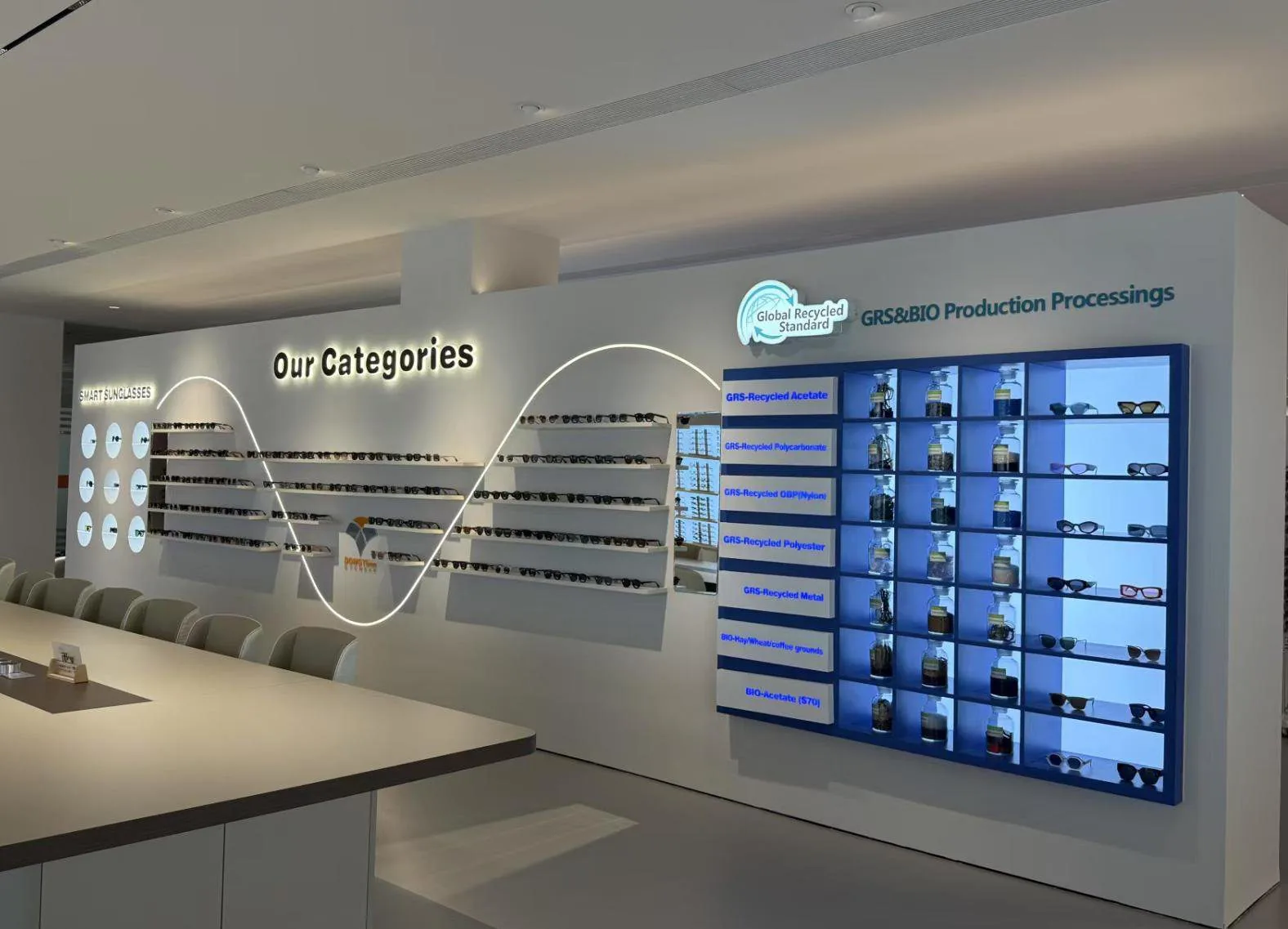
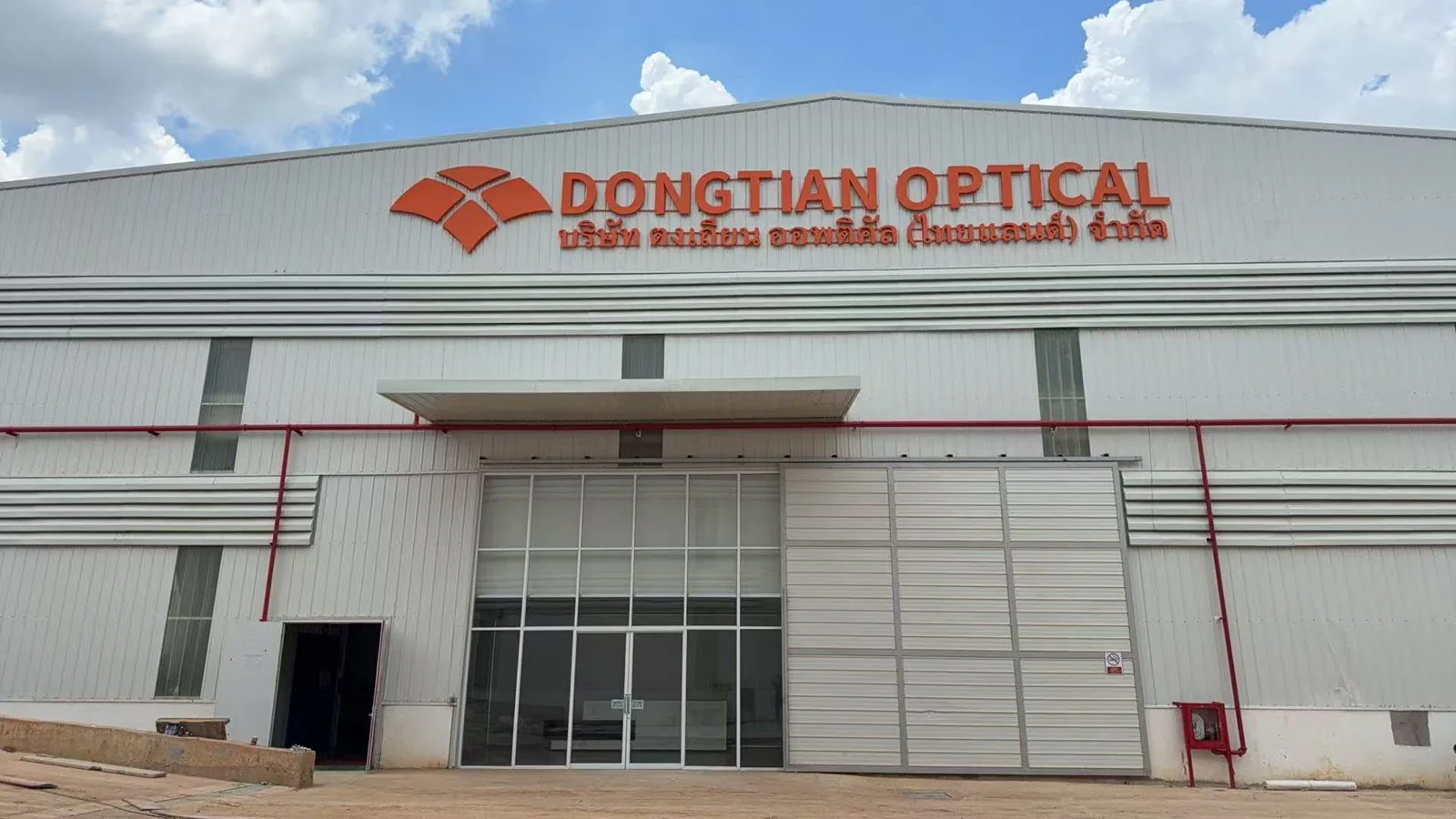
Mixed-material construction continues to spread from premium niches into mainstream collections, driven by brands looking for differentiation without starting every design from zero. Dongtian Eyewear, a Wenzhou manufacturer founded in 1996 operating acetate, metal, PC, and TR90 production lines in one factory system — with in-house lens production and an extensive component library — builds mixed-material frames for brands across 50+ countries with OEM and ODM orders from 300 pieces. The design freedom of combining materials is only as good as the manufacturing that holds the combination together — and that, ultimately, is a single-roof capability.