
“What is your MOQ?” is usually the first question a brand asks a factory — and the answer is usually the least understood number in the whole conversation. This guide explains what eyewear MOQs really are, why factories set them, what is normal in 2026, and how to negotiate a starting point that works for your brand stage.
If you have started contacting eyewear manufacturers in China, you have already seen the pattern: one factory quotes 300 pieces per model, another says 1,200 per color, a third offers “no MOQ” — and their prices differ by 40%.
None of them are necessarily wrong. MOQ is not a single number; it is a structure — per order, per model, per color, per material — and understanding that structure is the difference between a smart first order and a warehouse full of frames you cannot sell.
Here is the complete picture, from the manufacturer’s side of the table.
What MOQ Actually Means in Eyewear Manufacturing
MOQ (Minimum Order Quantity) is the smallest production run a factory can accept while still covering its setup costs. In eyewear, you will encounter it at four levels:
- Per order — the minimum total pieces in one purchase order (e.g., 300 pcs).
- Per model — the minimum for each frame design (e.g., 300 pcs of model A).
- Per color — the minimum for each colorway of the same model (e.g., 100 pcs in black, 100 in tortoise, 100 in crystal).
- Per material/component — minimums imposed by upstream suppliers (acetate sheets, metal wire, lenses, custom hinges) that the factory passes through to you.
When a factory says “MOQ 300,” always ask: 300 per what? A quote of “300 pcs per order, 100 pcs per color” is a very different commitment from “300 pcs per color.”
Why Factories Set MOQs: The Cost Structure Behind the Number
MOQs exist because eyewear production has real fixed costs that do not shrink with small orders:
| Cost Driver | What Happens | Why It Sets a Floor |
|---|---|---|
| Line setup & changeover | Machines are reconfigured, molds and jigs mounted, first-article inspection done | Same setup cost whether you make 100 or 10,000 pieces |
| Material purchasing | Acetate sheets, metal coils and lenses are bought in supplier minimums | One acetate sheet yields roughly 200-400 frames; custom colors require full sheets |
| Tooling & molds | Injection molds for TR90/PC frames cost thousands of dollars | Amortized across the run — small runs carry huge per-unit tooling cost |
| QC & compliance testing | AQL inspections, hinge cycle tests, drop ball tests | Testing effort is nearly constant per batch regardless of size |
| Documentation & logistics | Export declarations, certificates, freight coordination | Fixed admin cost per shipment |
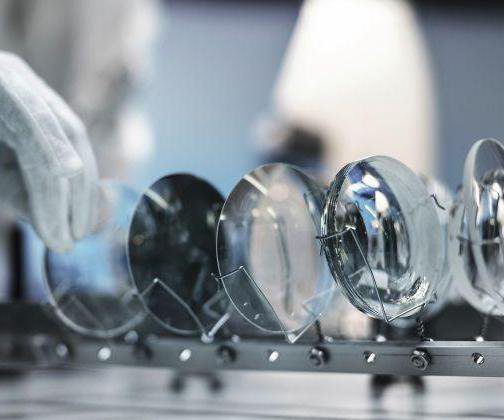
This is why a 100-piece custom order either gets refused or priced at a steep premium: the factory would lose money at standard pricing. Understanding this makes you a better negotiator — you can negotiate on the right levers (colors, materials, stock programs) instead of just pushing on a number.
Typical Eyewear MOQs in 2026: What Is Normal
Based on current Wenzhou/Shenzhen market conditions, here are realistic benchmarks:
| Business Model | Typical MOQ | Structure | Lead Time |
|---|---|---|---|
| Ready stock (factory’s existing styles, no branding changes) | 100 pcs per order | Often mixable across models, 10-20 pcs per style | 10-15 days |
| ODM / private label (factory styles + your logo & packaging) | 300 pcs per order | Usually 100 pcs per color × 3 colors per model | 60-90 days |
| OEM (your custom design) | 300-600 pcs per model | 100-200 pcs per color; tooling cost may apply for injection frames | 75-90 days |
| Custom acetate color / pattern | Higher material MOQ | Custom acetate sheets are produced in batches — expect +200-400 pcs per custom color | Add 15-30 days |
| Titanium or complex metal work | 300-500 pcs per model | Specialized lines, fewer factories, stricter minimums | 90+ days |
Two important nuances:
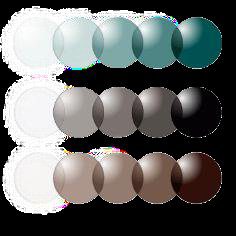
- Sunglasses vs. optical frames: MOQs are similar, but sunglasses add lens minimums — plano sun lenses are typically ordered in pairs at 200-500 piece minimums per tint.
- Accessories have their own MOQs: Custom logo cases, pouches, and cleaning cloths usually start at 500-1,000 pieces from sub-suppliers. Many factories (including us) will produce extra accessories in one run and store them for your repeat orders — ask about this.
Ready Stock vs. Custom Production: Choosing Your Entry Point
For new brands, the smartest path is usually not the lowest MOQ — it is the lowest risk:
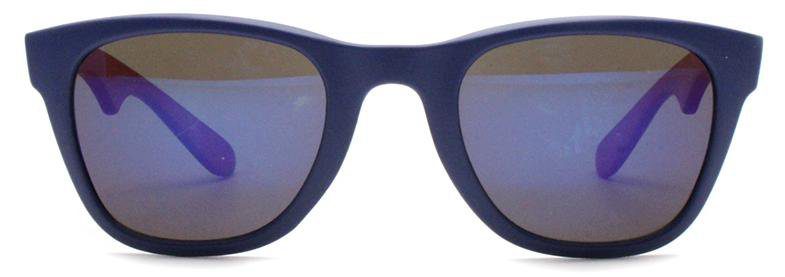
Ready stock (100 pcs) is ideal when you are validating a market, testing price points, or building initial cash flow. You get proven styles in 10-15 days, and you learn what your customers actually buy before committing to custom development.
ODM (300 pcs) is the sweet spot for brands with a validated audience: factory-engineered styles with your logo, custom packaging, and color selection — full brand presentation without tooling risk.
OEM (300-600 pcs) makes sense when your design is your differentiation and you have the sales history to justify it.
If you are unsure which model fits your stage, our OEM vs ODM guide breaks down the cost and risk trade-offs in detail — and our 7-step factory vetting guide shows you how to verify any MOQ claim before you pay a deposit.
8 Ways to Negotiate a Lower Effective MOQ
Factories rarely lower the number just because you ask. They lower it when you reduce their cost or risk. These tactics actually work:
- Choose stock materials and colors. Using the factory’s existing acetate sheets and standard lens tints removes upstream minimums entirely — this is the single most effective lever.
- Reduce colorways. Three colors at 100 pcs each is standard; offering to do two colors simplifies the run and often unlocks flexibility on the total.
- Consolidate models. One model in three colors is cheaper to produce than three models at 100 each, even at the same total quantity.
- Accept standard components. Stock hinges, standard nose pads, and existing temple tips avoid component minimums.
- Skip custom packaging on the first order. Use the factory’s neutral packaging, then add custom cases (with their own 500-1,000 pc MOQs) on order two.
- Commit to a reorder schedule. A signed forecast — “300 now, 600 in Q2, 1,200 in Q3” — gives the factory revenue certainty worth more than a large first order.
- Pay faster. Offering 50% deposit instead of 30% (or full payment for small trial orders) reduces the factory’s cash-flow risk on a marginal run.
- Use the ready-stock program as your bridge. Start at 100 pcs of stock styles, and let the factory count your trial order toward a custom production relationship.
MOQ and Price: How Quantity Tiers Affect Unit Cost
Unit price drops with quantity, but not linearly. Typical eyewear price-break structure (illustrative ranges for acetate sunglasses, FOB):
| Quantity | Relative Unit Price | What Changes |
|---|---|---|
| 300 pcs | 100% (baseline) | Standard run, standard materials |
| 500-1,000 pcs | 92-95% of baseline | Material buying improves slightly, setup amortized better |
| 1,000-3,000 pcs | 85-90% of baseline | Bulk material pricing, dedicated line time |
| 3,000+ pcs | 78-85% of baseline | Full material negotiation leverage, priority scheduling |
The steepest drop is between 300 and ~1,000 pieces. Beyond 3,000 pieces per model, savings flatten — at that point, negotiating payment terms, packaging upgrades, or free accessories often yields more value than chasing another 2% off.
When a Low MOQ Is a Trap
A suspiciously low MOQ is not always a gift. Watch for these situations:
- “No MOQ” custom production — either a trading company marking up small factory runs, or a workshop that will squeeze margin out of materials and QC.
- Low MOQ with high unit price and no price-break schedule — legitimate factories can always show you quantity tiers; the absence of a tier table suggests improvised pricing.
- Low MOQ but 100% payment upfront — the factory is transferring all risk to you; standard terms are 30/70 against B/L.
- MOQ that changes mid-negotiation — a factory that quoted 300 and revises to 1,200 after sampling has either misjudged your product or is testing your commitment.
A reliable manufacturer will explain why their MOQ is what it is — per model, per color, per material — in the first conversation. Vagueness about MOQ structure predicts vagueness about everything else.
Frequently Asked Questions
What is the typical MOQ for sunglasses from China?
For custom production (OEM/ODM), the industry norm is 300 pieces per order, usually structured as 100 pieces per color across 3 colors. Ready-stock sunglasses programs start around 100 pieces with mixed styles, shipping in 10-15 days.
Can I order 50 or 100 pieces of a custom design?
Rarely at standard pricing — line setup and material minimums make sub-300 custom runs uneconomical for both sides. Your realistic options are ready stock at 100 pcs, or negotiating stock materials and consolidated colors to make a 300-piece custom run work.
Why is the MOQ per color, not just per model?
Each colorway requires its own material batch (acetate sheet, metal plating color, or injection colorant) and its own line changeover. The per-color minimum — typically 100 pcs — is what keeps those changeovers economical.
Do accessories like cases and cloths have separate MOQs?
Yes. Custom logo cases, pouches and cleaning cloths typically start at 500-1,000 pieces from specialist sub-suppliers. Many factories will produce them in bulk and store the extras for your future orders.
Does a higher order quantity always mean a better unit price?
Up to a point. The biggest price improvement happens between 300 and 1,000 pieces per model. Beyond roughly 3,000 pieces, unit-price gains flatten and other terms (payment, packaging, accessories) become better negotiation targets.
How do MOQs differ between OEM and ODM eyewear?
ODM (factory styles + your branding) typically starts at 300 pcs per order with existing tooling. OEM (your design) runs 300-600 pcs per model and may add tooling costs for injection-molded frames. See our full OEM vs ODM comparison for the detailed breakdown.
The Bottom Line
MOQ is not an arbitrary barrier — it is the arithmetic of line setups, material sheets, and testing batches. The brands that source well do not hunt for the lowest MOQ; they pick the right entry model (ready stock → ODM → OEM), negotiate on materials and colors rather than the headline number, and use reorder commitments to earn flexibility.
Any factory that cannot clearly explain its MOQ structure — per order, per model, per color, per material — has not thought about your order as carefully as you have.
About Dongtian Eyewear: Founded in 1996 in Wenzhou, China, Dongtian operates 45,000 m² of facilities across China and Thailand with 4 production lines and an in-house lens workshop. Our MOQ structure is simple: 100 pcs ready stock (10-15 days) or 300 pcs per order for OEM/ODM (75-90 days), with FOB, EXW and DAP terms — and yes, we will happily explain the reasoning behind every number.
Ready to plan your first order? Send us your target styles and quantities — we will come back with a tiered quote showing exactly what changes at 100, 300, and 1,000 pieces.