



Every eyewear factory’s website shows a wall of certification logos. Few buyers know which ones are legally required, which ones retailers demand, which ones are marketing — and how to tell a real certificate from a borrowed one. This guide decodes every major eyewear certification and shows you exactly how to verify them.
Certifications in eyewear sourcing fall into two completely different categories, and confusing them is the most common mistake new importers make:
- Product compliance certifications — legal requirements to sell eyewear in a market (CE for Europe, FDA for the USA). Without these, your goods can be seized at customs or recalled from shelves.
- Factory and system audits — third-party verification of how the factory operates (ISO 9001, BSCI, SEDEX, GRS, HIGG). These are not legally required to import, but retail chains increasingly refuse suppliers without them.
A reliable manufacturer holds both. Here is what each one actually means.
Product Compliance: The Certifications That Get Your Goods Through Customs
CE Marking (European Union)
CE is mandatory for selling eyewear in the EU/EEA. The relevant standards:
| Produit | Standard | What It Tests |
|---|---|---|
| Sunglasses | EN ISO 12312-1 | UV protection, light transmittance categories (0-4), impact resistance, labeling |
| Optical frames | EN ISO 12870 | Dimensional stability, nickel release, flammability, durability |
| Reading glasses | EN 14139 | Optical power tolerance, prism imbalance, mechanical strength |
| Sports/impact eyewear | EN 166 (PPE) | High-velocity impact — note: this makes the product PPE, with stricter rules |
Critical detail most buyers miss: CE for eyewear is largely self-declared. The manufacturer (or you, as the EU importer) issues a Declaration of Conformity based on test reports from an accredited lab. This means the test report is the real document — always ask for the underlying lab report (SGS, TÜV, Intertek, Bureau Veritas), not just a CE logo on a catalog.
Also note: since Brexit, the UK requires UKCA marking, though CE is currently still accepted for most goods — confirm the latest rules for your selling market.
FDA Requirements (United States)
The FDA classifies sunglasses and prescription eyewear as Class I medical devices. The practical requirements:
- Impact-resistant lenses: Every lens sold in the US must pass the drop ball test (21 CFR 801.410) — a 5/8-inch steel ball dropped from 50 inches onto the lens. Every batch must be tested, and records kept.
- Establishment registration & device listing: The foreign manufacturer must register with the FDA and list the devices; importers need this registration number for customs entry.
- Labeling: Claims like “UV400” or “polarized” must be substantiated by test data.
A factory that cannot explain the drop ball test procedure — or does not perform it in-house per batch — is a liability for the US market, because you as the importer carry the legal responsibility.
Other Markets Worth Knowing
- Australia/New Zealand: AS/NZS 1067 — mandatory for sunglasses, one of the strictest UV standards in the world.
- ANSI Z80.3 (USA): Voluntary but often requested by US retailers; covers optical quality and transmittance.
- ISO 12312-1 (international): The base standard most national standards reference.
Factory & System Audits: What Retail Chains Actually Check
Product tests prove the product is safe. Factory audits prove the company behind it is stable, ethical, and capable of repeating that quality ten thousand times. This is the second wall of certifications:
| Certification | Category | What It Verifies | Who Asks for It |
|---|---|---|---|
| ISO 9001 | Quality management | Documented processes, corrective action systems, management responsibility | Baseline expectation for any serious buyer |
| BSCI | Social compliance | Working hours, wages, safety, no child/forced labor (amfori platform) | Most European retail chains and buying groups |
| SEDEX / SMETA | Social compliance | Similar scope to BSCI, 2-pillar (labor+H&S) or 4-pillar (+environment, ethics) | UK retailers especially; some accept either BSCI or SEDEX |
| GRS (Global Recycled Standard) | Chain of custody | Verified recycled content (e.g., recycled acetate, rPET) with traceable documentation | Any brand marketing eco/recycled collections — legally protects your claims |
| HIGG / FEM | Environmental | Facility-level environmental performance (energy, water, waste, chemicals) | Large international brands with ESG programs |
| WRAP / SA8000 | Social compliance | Alternative social audit frameworks | Some US buyers |
Two things to understand about this category:
Audits are per-facility. A BSCI report for one address covers exactly that address. If a supplier shows you a certificate belonging to a “group company” or a different plant, your order is not covered.
Audit reports have scores, not just pass/fail. A BSCI report graded A or B is meaningfully different from a C (acceptable with follow-up) — ask for the actual rating and audit date, and verify the report ID in the amfori or Sedex platform.
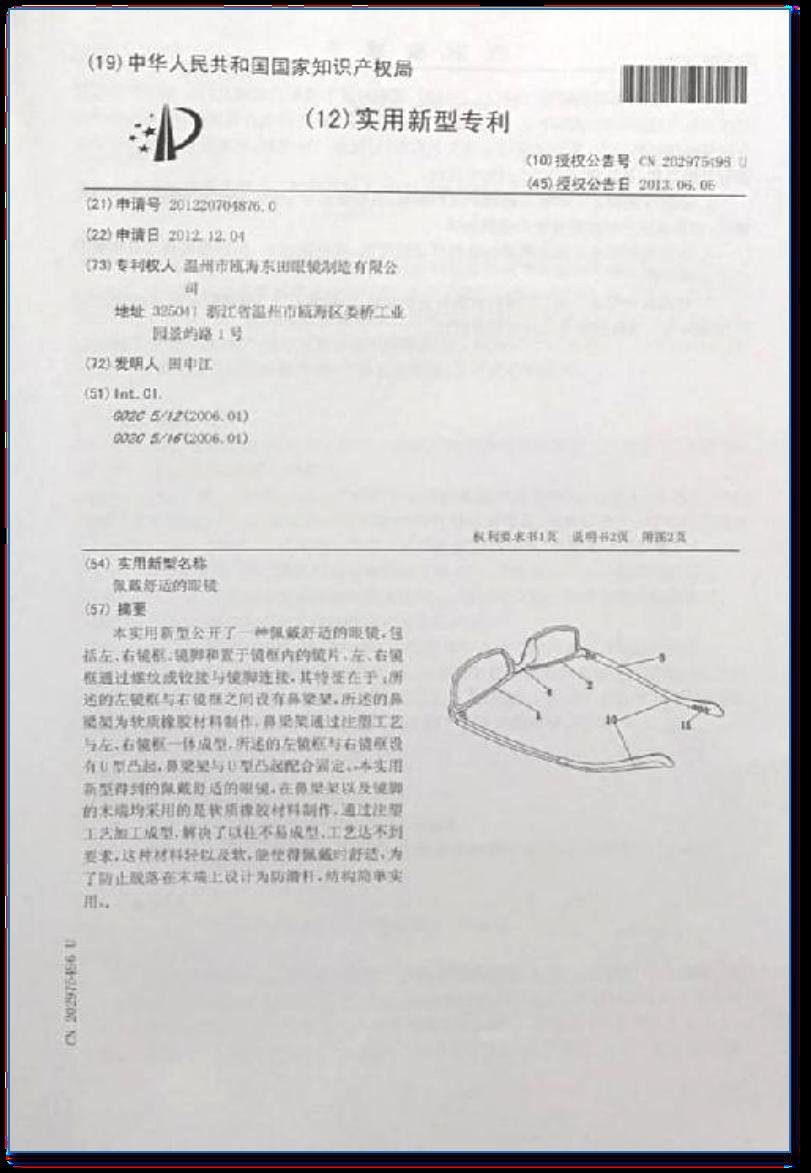
What Testing Equipment Should a Certified Factory Actually Own?
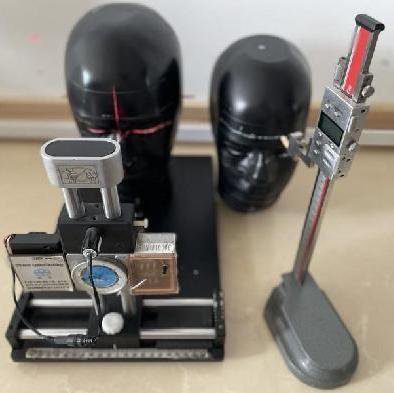
Paper certificates are only half the story. A factory that truly operates to these standards runs physical tests daily. When you audit (in person or by video), look for:
- Drop ball tester / impact headform — FDA 21 CFR 801.410 (US-bound batches)
- Hinge durability tester — thousands of open/close cycles per ISO 12870
- Nickel release test capability (or accredited third-party arrangement) — mandatory for EU metal frames
- Salt spray & sweat resistance testers — coating durability for metal frames
- Spectrophotometer / UV transmission meter — verifying UV400 and transmittance category claims
- Color assessment light booth — standardized D65 lighting for color-matching acetate and coatings
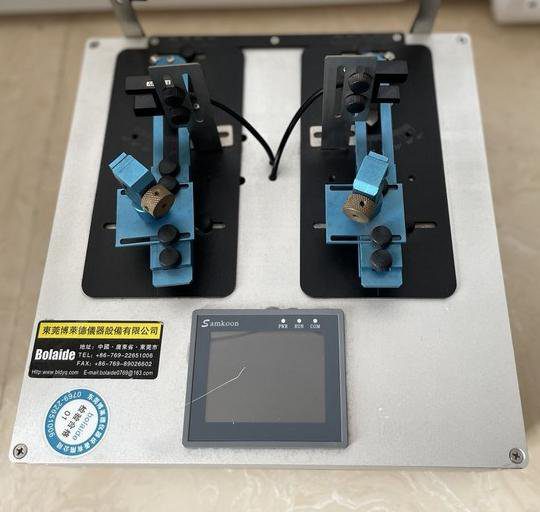
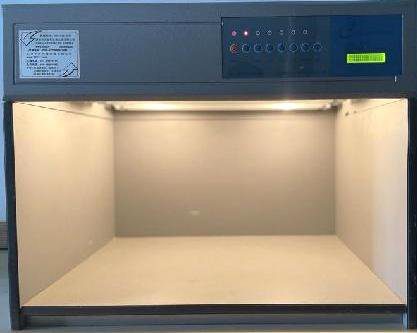
A factory with a wall of certificates but no working test equipment is running on paperwork. A factory with a busy lab and current certificates is running on systems.
How to Verify Any Certificate in 15 Minutes
You do not need to be a compliance expert. Follow this checklist:
- Get the full PDF, not a logo or a cropped screenshot.
- Check the company name and address — must exactly match the factory producing your order (Chinese name on the business license, not just an English trading name).
- Check the scope — an ISO 9001 certificate scoped to “trading of eyewear” does not cover manufacturing.
- Check the expiry date — expired certificates are surprisingly common in supplier decks.
- Verify with the issuer — ISO certificates can be checked with the certification body (SGS, TÜV, Bureau Veritas) by certificate number; BSCI audits via the amfori platform; SEDEX via the Sedex database; GRS via the Textile Exchange public database. A two-minute email or database lookup settles it.
- For CE/FDA, ask for the underlying test reports — lab name, report number, date, and the exact model tested. A report for model A does not cover model B.
Our 7-step factory vetting guide covers the full audit process beyond certifications, and the OEM vs ODM guide explains which compliance responsibilities sit with you versus the factory under each business model.
Red Flags: Certification Warning Signs
Walk away (or demand clarification) when you see:
- Certificate registered to a different company name (“our brother factory”)
- Blurry, low-resolution scans that hide dates and scope
- Expired certificates presented as current
- CE “certificates” from unknown bodies — remember, eyewear CE is self-declared against lab test reports; the test report is the document to demand
- Refusal to provide report numbers or allow issuer verification
- Social audit reports older than 12-18 months (BSCI/SEDEX are cyclical)
- “We can get any certification you need” — legitimate factories hold certifications; they do not promise to acquire them after you pay a deposit
- GRS claims without transaction certificates for each recycled-material shipment
Frequently Asked Questions
What certifications are legally required to import sunglasses into the EU?
CE marking under EN ISO 12312-1, backed by accredited lab test reports and a Declaration of Conformity. As the importer, you share legal responsibility — so keep the test reports for every model you bring in.
What does the FDA require for eyewear sold in the USA?
Impact-resistant lenses proven by the drop ball test (21 CFR 801.410) on every batch, plus FDA establishment registration and device listing by the manufacturer. Sunglasses are Class I medical devices in the US.
What is the difference between BSCI and SEDEX?
Both are social compliance audit frameworks covering labor conditions, wages, hours and safety. BSCI (amfori) dominates in continental Europe; SEDEX/SMETA is common with UK buyers. Many retailers accept either. Always ask your retail partner which they require before paying for a new audit.
How do I know if a factory’s certificate is fake?
Verify the certificate number directly with the issuing body — SGS, TÜV, Bureau Veritas for ISO; amfori platform for BSCI; Sedex database for SMETA; Textile Exchange database for GRS. Check that the company name, address, scope and dates all match. Fakes almost never survive one verification email.
Do I need GRS certification to sell “recycled” sunglasses?
Legally, green claims in the EU and US must be substantiated — and GRS is the recognized chain-of-custody standard for recycled materials. Without it (or equivalent), “recycled acetate” claims expose your brand to greenwashing liability, not just the factory.
Does a CE mark on sunglasses mean they passed government testing?
No. CE for eyewear is a self-declaration by the manufacturer or importer, based on test reports from an accredited laboratory. This is why requesting the underlying EN ISO 12312-1 test report matters more than the CE logo itself.
The Bottom Line
Certifications in eyewear are a two-layer system: product compliance (CE, FDA) gets your goods legally into the market, and factory audits (ISO 9001, BSCI, SEDEX, GRS, HIGG) prove the manufacturer can sustain that quality and pass retailer due diligence. Verify both layers by document number, scope, address and date — it takes fifteen minutes and it is the cheapest due diligence in all of sourcing.
Once compliance is verified, the commercial side matters just as much — our eyewear MOQ guide explains the order-quantity structures and negotiation levers to plan your first certified production run.
About Dongtian Eyewear: Founded in 1996 in Wenzhou, China, Dongtian holds ISO 9001, CE, FDA, BSCI, SEDEX, GRS and HIGG certifications across our 45,000 m² facilities in China and Thailand, exporting to 50+ countries. Our in-house QC lab runs drop ball, hinge durability, salt spray and UV transmittance testing on every production batch — and we provide full test reports and certificate numbers with every quotation.
Need compliant eyewear for your market? Request a quote and tell us your destination countries — we will include the exact certification and test-report package for your market entry.