



For two decades, “where should I manufacture my eyewear?” had a one-word answer. Since the tariff waves of 2025-2026, it has become a genuine strategic question. This guide compares China and Thailand on the factors that actually matter — tariffs, supply chain depth, quality, lead time — and explains why the smartest answer in 2026 is often not “either” but “both.”
When the US tariff structure shifted again in July 2026 — the Section 122 duties expired and new Section 301 country-tiered duties took their place — the math of eyewear sourcing changed for the third time in eighteen months.
Brands that moved everything out of China in 2025 discovered the grass was not much greener. Brands that stayed 100% in China are paying a premium they could partially avoid. The winners are running dual-base strategies — and increasingly, they want a single manufacturing partner that operates in both countries.
Here is the honest comparison, with numbers current as of August 2026.
The Tariff Picture in 2026: The Gap Has Narrowed, Not Closed
For US-bound eyewear (HTS 9004, base MFN duty 2%), the current structure per The Vision Council’s July 2026 advisory:
| Origin | Base MFN | Country-Tier Duty | Legacy Section 301 | Approx. Total | Status |
|---|---|---|---|---|---|
| China | 2% | +12.5% (new 301 tier) | +7.5% (stacking advised) | ~22% | Plan for stacking |
| Thailand | 2% | +12.5% | — | ~14.5% | Same tier as Vietnam |
| Vietnam | 2% | +12.5% | — | ~14.5% | Watch transshipment rules (40% penalty tier) |
| EU (e.g., Italy) | 2% | Capped ~15% all-in | — | ~15% | Premium segment |
| USMCA Mexico | 0% if qualifying | — | — | 0% | Limited eyewear capacity |
Three takeaways that most 2025-era articles get wrong:
- The arbitrage shrank. China at ~22% vs Thailand at ~14.5% is a real but modest 7-8 point gap — not the 25+ point chasm of early 2025. On a $6 FOB frame, that gap is roughly $0.45-0.50 per piece.
- Everything is litigation-sensitive. The IEEPA-based tariffs were under US Supreme Court review in mid-2026, and USTR has an excess-capacity investigation running that could trigger another round. Any number you read — including these — needs re-verification at order time.
- Origin rules bite. The 40% transshipment penalty tier for Vietnam shows the US is policing “relabeled” Chinese goods. Real origin change requires real manufacturing substance — cutting, forming, assembly — not a repackaging warehouse.
Beyond Tariffs: The Full China vs Thailand Comparison
Tariffs are one line item. Here is the comparison that actually drives total cost and risk:
| Factor | China (Wenzhou cluster) | Thailand |
|---|---|---|
| Supply chain depth | Complete: acetate sheet producers, hinge & screw makers, lens factories, plating, packaging — all within 100 km | Thin: most acetate, components and lenses still imported, largely from China |
| Craftsmanship depth | 30+ years of eyewear specialization; deep bench of experienced acetate polishers, metal welders, CNC operators | Growing but younger workforce; complex handmade acetate work still maturing |
| Labor cost | Higher than Thailand and rising | Lower base wages |
| Material lead time | Days (local suppliers) | Weeks (imported materials + customs) |
| Sampling speed | Fast — materials and components on hand | Slower when materials ship from China first |
| Tariff to US | ~22% (as of Aug 2026) | ~14.5% (as of Aug 2026) |
| Tariff to EU | Standard MFN; no FTA | Standard MFN; no FTA (similar) |
| Logistics | Ningbo/Shanghai ports, dense sailings | Laem Chabang port, fewer direct sailings to some markets |
| Complex/custom work | Best-in-class for intricate acetate, titanium, mixed materials | Best suited to stable, proven styles at volume |
| Political/tariff risk | Directly exposed to US-China friction | Lower profile, but new 301 tier shows no country is exempt |
The pattern is clear: China wins on supply chain, speed, and complexity. Thailand wins on US tariff exposure and labor cost. Neither wins on everything — which is exactly why dual-base exists.
What “Dual-Base Manufacturing” Actually Looks Like
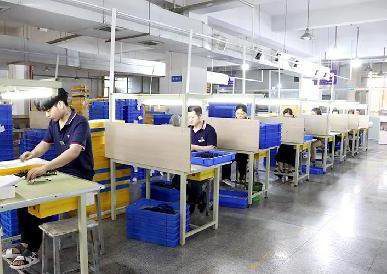
The strongest answer to 2026’s uncertainty is a manufacturer that operates real production in both countries, under one management system. Not a Chinese factory with a Thai sales office, and not two unrelated subcontractors — one company, two plants.
How it works in practice:
- One engineering team develops the product and tech pack in China, where sampling is fastest.
- Production is allocated by logic, not habit: US-bound orders can run in Thailand to capture the tariff gap; EU-bound, complex, or fast-turn orders run in China where the supply chain is deepest.
- Same QC system in both plants: identical inspection standards, testing equipment, AQL levels, and reporting formats — so the origin changes, the quality doesn’t.
- Flexible re-allocation: when tariff policy shifts again (and it will), volume moves between plants without you changing suppliers, re-vetting factories, or re-negotiating terms.
One critical verification point: certifications are issued per facility. If you rely on BSCI, ISO 9001, or other audits, confirm both plants hold their own current certificates — our certifications guide explains how to verify scope and addresses, and the factory vetting guide covers the full audit process.
Which Products Should Run Where?
A pragmatic allocation framework we use with our own customers:
Run in China when: – The design is complex: handmade acetate, intricate metal work, titanium, mixed materials – You need fast sampling iterations or compressed lead times – The order uses custom materials (special acetate patterns, custom lens tints) that live in the Chinese supply chain – The destination is the EU or other markets where the China/Thailand tariff difference is negligible
Run in Thailand when: – The order is US-bound and the style is proven and stable (the tariff gap is real money at volume) – You are scaling a validated bestseller where design iteration is finished – You want tariff-hedge capacity contracted before the next policy shock, not after
Split when: – The same style sells in both the US and EU — run US allocation in Thailand, EU allocation in China, one PO, one QC standard
Questions to Ask Any Dual-Base Factory
Before you trust a “China + Thailand” claim, ask:
- Is the Thai plant wholly owned, a joint venture, or a subcontractor relationship? (Ask for the business registration.)
- Which certifications does each facility hold? (BSCI/ISO are per-site.)
- What percentage of materials for Thai production still comes from China — and how does that affect origin qualification and lead time?
- Can you see the QC manual — is it literally the same document in both plants?
- How do they handle a mid-order re-allocation if tariffs change between deposit and shipment?
- What is the MOQ per plant? (Some factories set higher MOQs at their newer facility — our MOQ guide explains what structures are normal.)
- Can they show export records from both countries?
Frequently Asked Questions
Is it still cheaper to manufacture eyewear in China than Thailand in 2026? For US-bound goods, Thailand now has a tariff advantage of roughly 7-8 percentage points (~14.5% vs ~22% as of August 2026) plus lower labor costs. But China often wins on total landed cost for complex styles, custom materials, and fast-turn orders thanks to its complete local supply chain. The right answer depends on product, destination, and volume — not just the tariff line.
Are Vietnam and Thailand still good alternatives to China for eyewear? Yes, but the duty arbitrage has narrowed: as of mid-2026, both sit in the same ~14.5% tier vs China’s ~22%. Vietnam also carries stricter transshipment scrutiny (a 40% penalty tier). The decision is now about supply-chain fit and risk hedging, not a dramatic duty saving.
Will US tariffs on eyewear change again soon? Quite possibly. The IEEPA-based duties were under Supreme Court review in mid-2026, and USTR’s excess-capacity investigation could produce another round of Section 301 actions. Treat every published rate as “as of today” — verify with your customs broker or The Vision Council’s tracker before each order cycle.
What is a dual-base eyewear manufacturer? A single company operating real production facilities in two countries — typically China plus Thailand — under one management, engineering, and QC system. It lets you allocate production by tariff exposure, lead time, and complexity without changing suppliers or re-vetting factories.
Does making eyewear in Thailand avoid US tariffs on Chinese goods? Only if the product genuinely qualifies as Thai-origin under substantial-transformation rules — real manufacturing (cutting, forming, assembly) must happen there. Relabeling or minimal repackaging of Chinese-made goods risks the 40% transshipment penalty tier. Legitimate dual-base factories document the actual production performed at each plant.
Do I need separate certifications for a factory’s China and Thailand plants? Yes. ISO 9001, BSCI, SEDEX and similar certifications are issued per facility address. A certificate for the Chinese plant does not cover the Thai plant — verify each site separately with the issuing body.
The Bottom Line
In 2026, the China-vs-Thailand question has no universal answer — and that is precisely the point. China’s eyewear supply chain remains unmatched for complexity, speed, and materials. Thailand offers a meaningful US tariff advantage and labor cost edge for proven styles at volume. The brands sourcing smartest are choosing partners who can run both plays from one playbook: one engineering team, one QC standard, two countries.
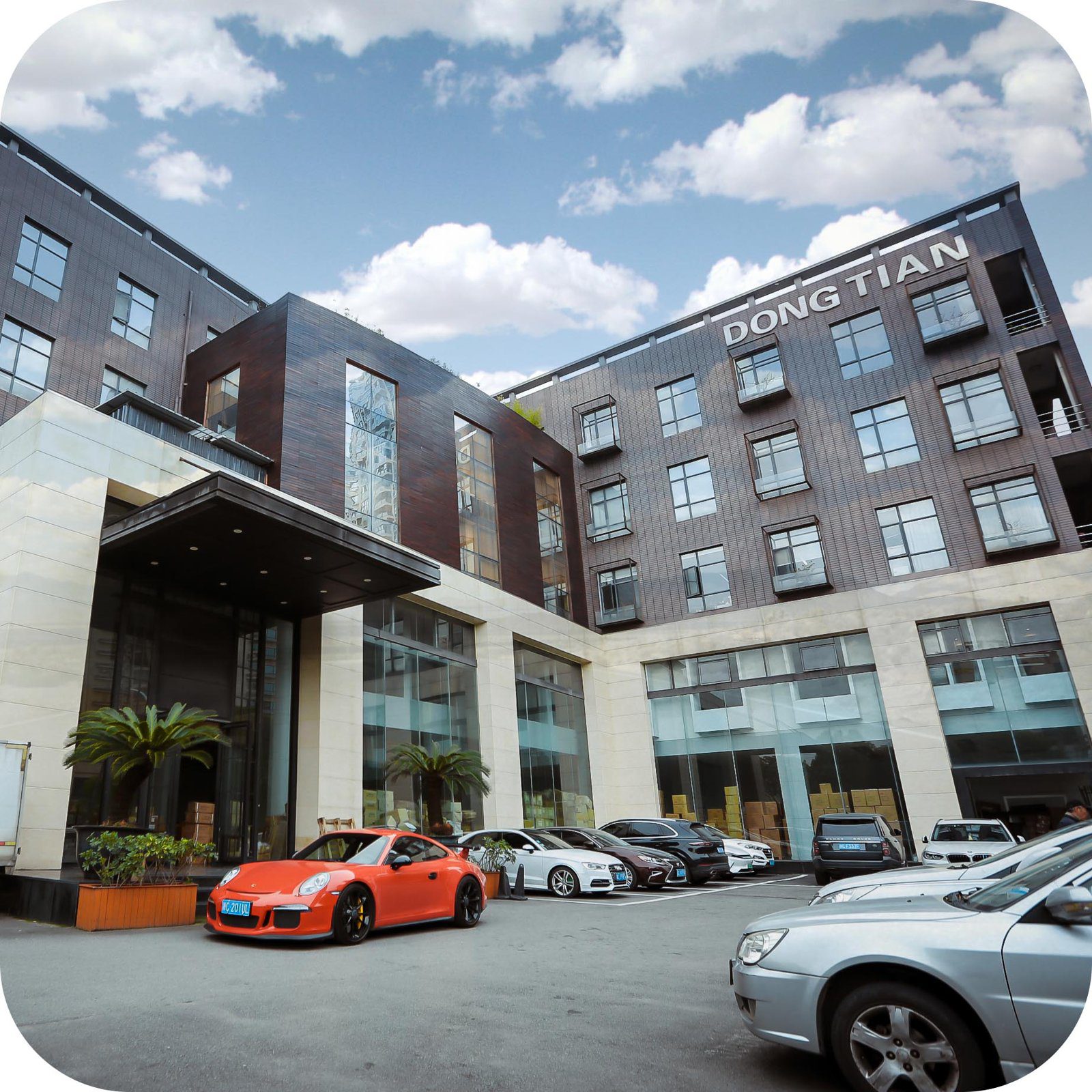
About Dongtian Eyewear: Founded in 1996 in Wenzhou, China, Dongtian operates 45,000 m² of manufacturing facilities in both China and Thailand (Thai plant opened 2024), with 4 production lines, an in-house lens workshop, and 1,000+ staff. Our dual-base structure lets you allocate US-bound production to Thailand and complex or EU-bound work to China — under one QC system, one MOQ structure (300 pcs OEM/ODM or 100 pcs ready stock), and one accountable team.
Want a dual-base quote? Send us your styles and destination markets — we will quote both origins side by side, with the tariff math shown transparently for each.
Tariff rates referenced are as of August 2026, based on The Vision Council’s advisories; rates are subject to change and pending litigation. Verify current rates with your customs broker before placing orders.