



Importing eyewear from China is simple — if you follow the sequence. Qualify the factory. Agree Incoterms. Lock compliance. Ship. Clear customs.
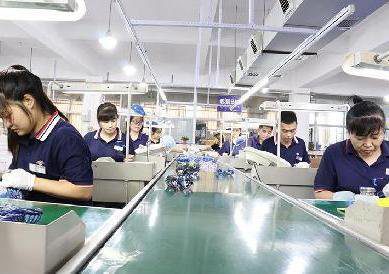
Most importers don’t fail at shipping. They fail at the steps they skip: compliance, documentation, QC. This guide walks the full journey from the manufacturer’s side of the table — so nothing surprises you at the border.
Step 1: Qualify the Factory Before You Compare Prices
The cheapest quote is often the riskiest supplier. Before price, verify:
- Manufacturer vs trading company — ask for the business license scope and production address, then match it against the quote. Our 7-step factory vetting checklist shows you exactly how.
- Certificates that match your market — ISO 9001 for the factory, CE for Europe, FDA for the US. Know which certificates actually matter — and demand the documents, not the logos.
- Capacity proof — a video factory tour or an in-person audit. Serious suppliers offer both without hesitation. Ours welcomes both.
Step 2: Get the Commercial Terms Right (Incoterms)
Three Incoterms cover 95% of eyewear deals:
| Term | Who arranges shipping | Best for | Watch out for |
|---|---|---|---|
| EXW (Ex Works) | Buyer | Buyers with their own freight forwarder | Factory price looks lowest — but you handle everything from the gate |
| FOB (Free on Board) | Buyer (sea/air), seller clears export | Most importers — the industry default | Confirm the port. Ningbo vs Shenzhen changes trucking cost |
| DAP (Delivered at Place) | Seller | First-time importers, small orders | Higher unit price — check which duties/taxes you still pay |
Most of our clients run first orders FOB Ningbo with their own forwarder — or DAP when they want the factory to own the whole leg. Both work. Pick one before the deposit, not after.
Step 3: Compliance Before Production — Not After
Nothing stalls a shipment faster than compliance discovered at the border:
- US market: FDA registration and drop-ball testing (21 CFR 801.410). Our FDA impact test on a headform is part of standard QC — the report ships with your goods.
- EU market: CE marking under PPE regulation. CE is self-declaration — so the test report is what actually proves it. Always ask for it.
- Documentation package: commercial invoice, packing list, bill of lading, test reports. Every shipment leaves with a full document set. Customs clearance becomes routine.
Step 4: Your Realistic Import Calendar
| Phase | Duration |
|---|---|
| Quotation + sample request | 3–7 days |
| Sample production (stock) | 7–15 days |
| Sample approval + deposit | Buyer-dependent |
| Mass production (OEM/ODM) | 75–90 days |
| QC + booking + export | 7–10 days |
| Sea freight to EU/US West Coast | 25–40 days |
Plan your buy calendar around these numbers. Our 2026 lead time guide maps them against Chinese New Year and tariff windows — so your stock arrives when you need it, not three weeks late.
Step 5: Match the Shipping Mode to the Order
- Sea freight (LCL) — most 300–5,000 pair orders. 25–40 days to EU/US.
- Sea freight (FCL) — above ~20,000 pairs, a 20ft container wins on cost.
- Air freight — samples and launch-critical replenishment. 3–7 days.
- Express (DHL/FedEx) — sample parcels and small ready-stock orders.
One more advantage: our dual-base supply chain. When tariffs or freight conditions shift, production moves between our China and Thailand facilities — no re-qualifying a new supplier.
Step 6: Customs Clearance — Give Your Broker These Four Things
Commercial invoice with the correct HS code (sunglasses 9004.10, optical frames 9004.90). Packing list. Bill of lading. Certificate of origin where preferential tariffs apply. That’s it. Duty rates vary by market and material — for US-bound goods, check the current Section 301 situation, which we track in our China vs Thailand tariff comparison.
Step 7: Incoming QC — Protect Yourself Before You Sell
Even with factory-side AQL inspection, smart importers run an arrival check on the first three orders: hinge cycles, plating, lens alignment, packaging. If defects exceed the agreed AQL, your recourse depends entirely on the terms you signed. One more reason to work with a factory that puts its QC process in writing — before the deposit.
Frequently Asked Questions
What’s the minimum order to import from China?
Ready stock starts at 100 pairs. Full OEM/ODM starts at 300 pairs per model. Full breakdown in our MOQ guide.
How do I pay an overseas factory?
Industry standard is T/T — 30% deposit, 70% against B/L copy. After several clean orders, established buyers move to longer terms.
Can the factory ship under my brand?
Yes — neutral packing or full private label: your logo, your packaging, from carton marks to retail boxes.
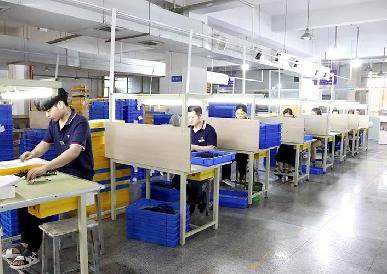
Start Your First Import — the Safe Way
Send us your target market, quantity and timeline. You get factory pricing, a compliance checklist for your market, and a shipping plan. Request a quote — response within 24 hours.